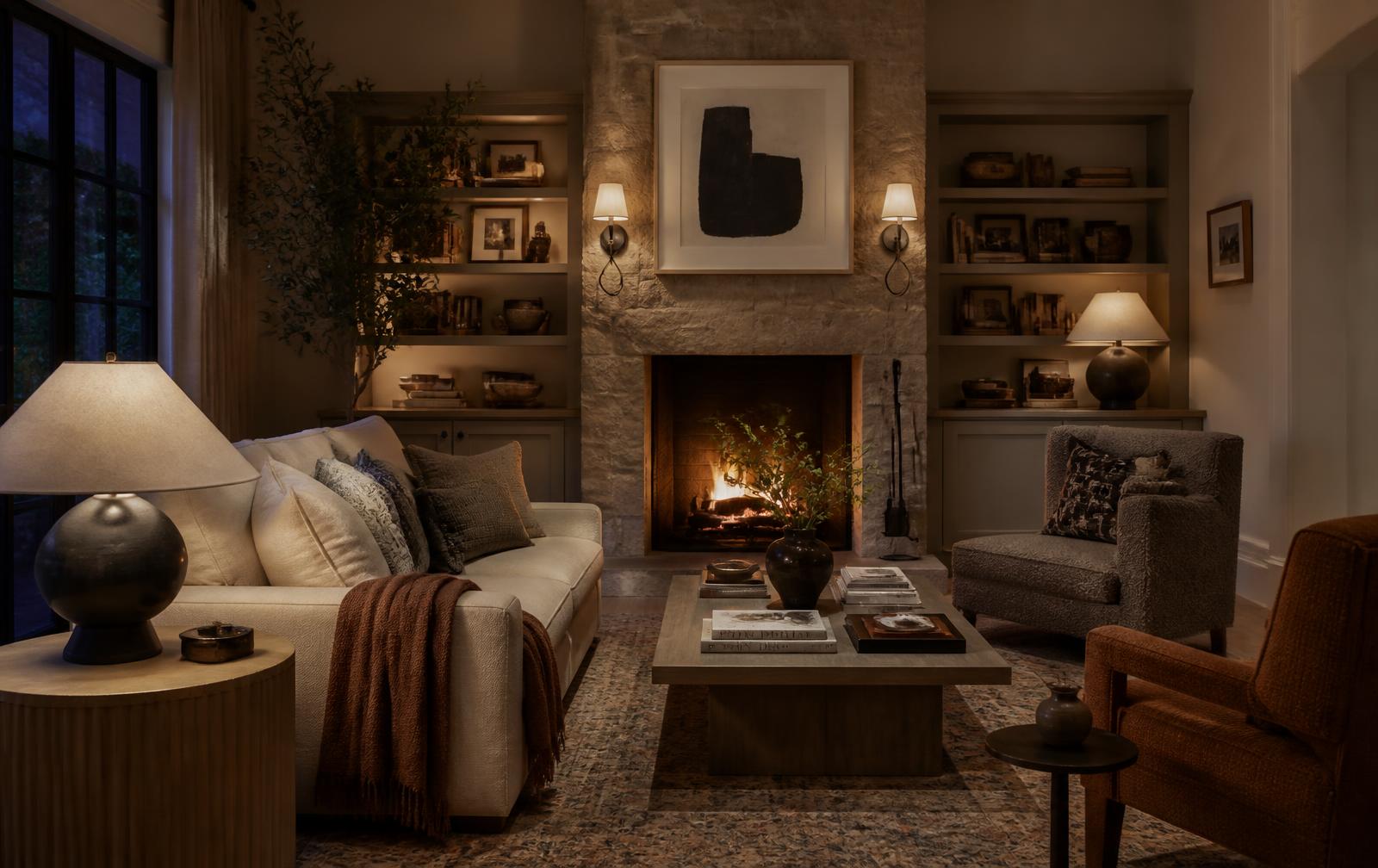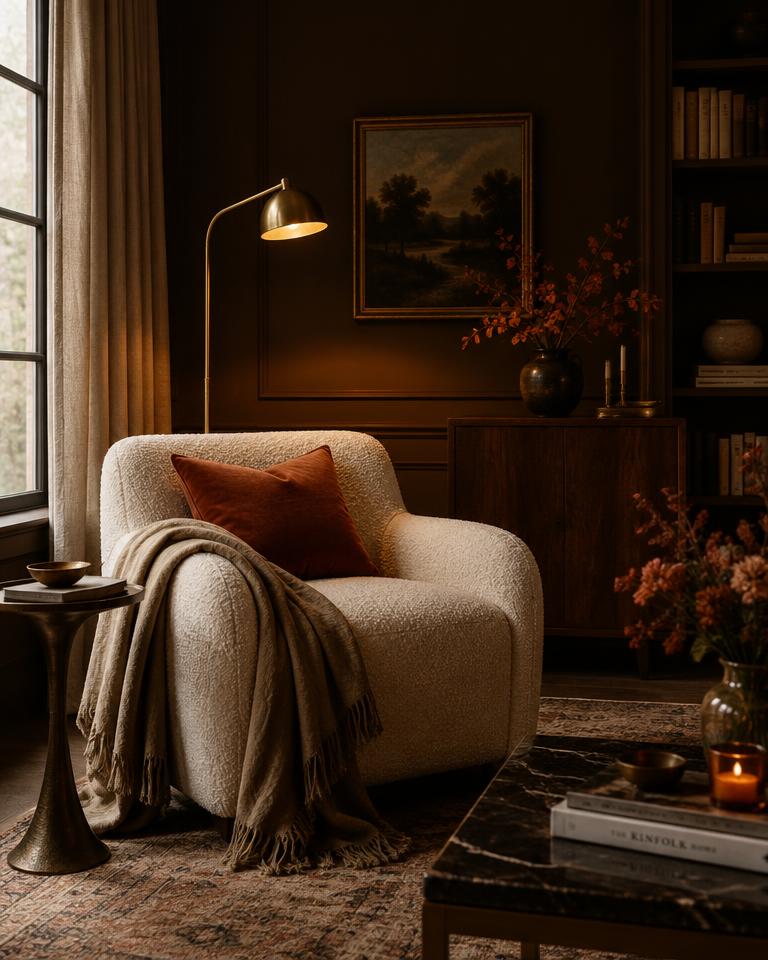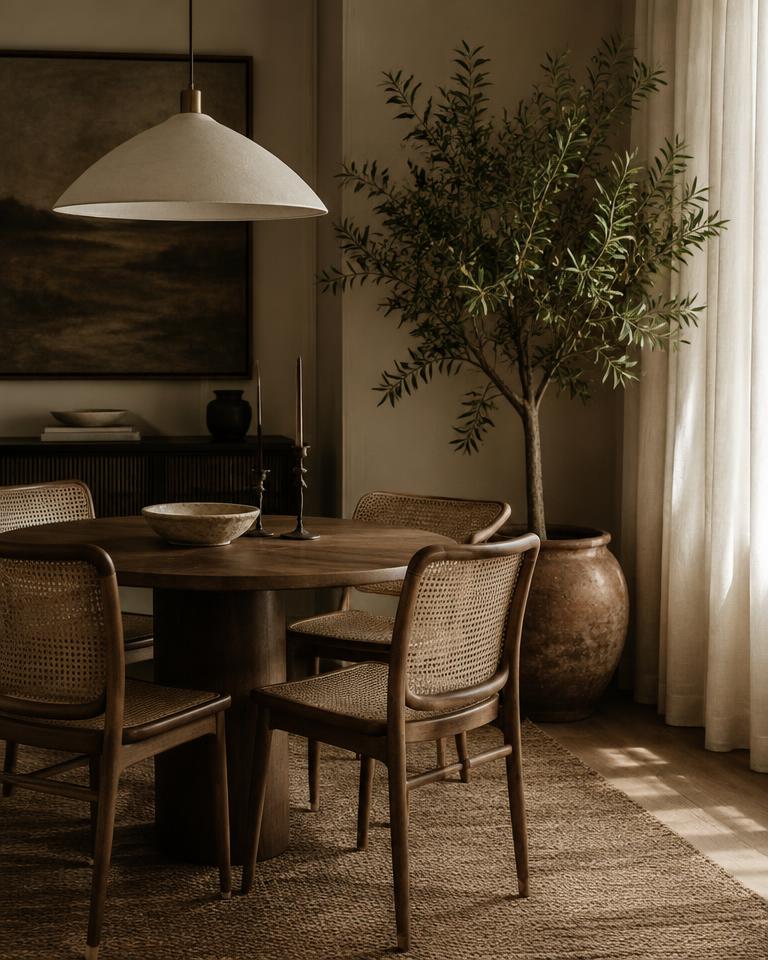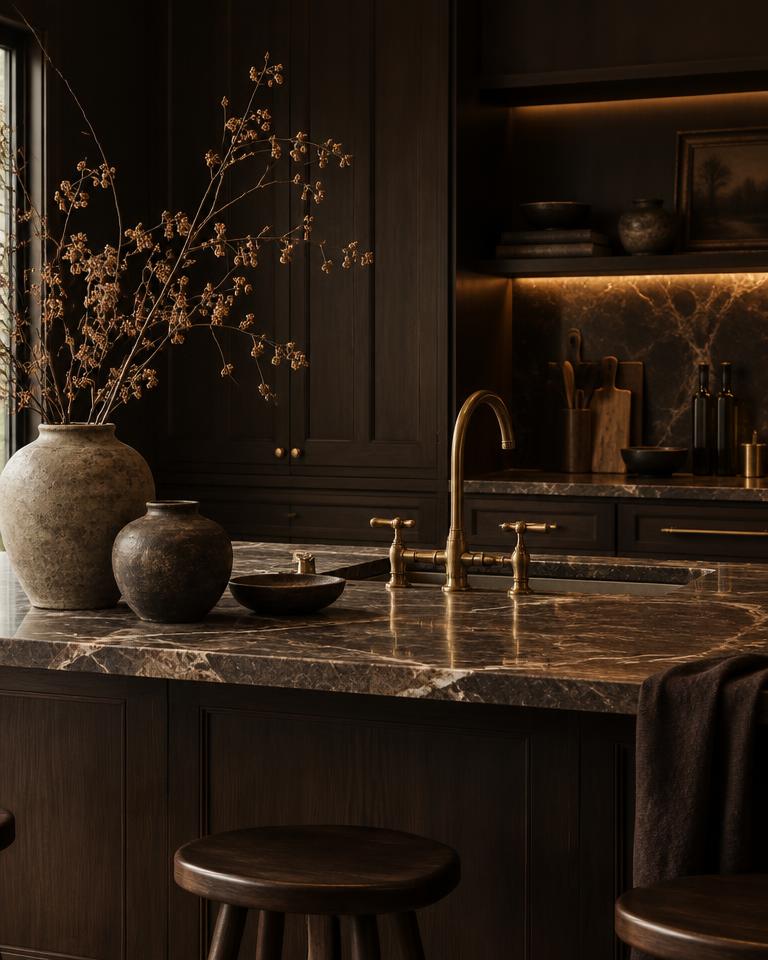
You do not need to arrive at an interior design consultation knowing whether you are modern, traditional, organic, transitional, or something in between. A good design process can help uncover the patterns behind what you already respond to and turn them into a space that feels distinctly yours.
There is a question I hear in different forms all the time:
“Do I need to know my design style before I hire a designer?”
No.
In fact, I would much rather understand what you are naturally drawn to than have you arrive feeling like you need to fit yourself into a predefined design category.
Style labels can be useful. They give us shorthand. If you tell me you are drawn to Art Deco, organic modern, traditional interiors, or mid-century furniture, that gives us something to react to.
But those labels are not the design.
They are clues.
The more important work is understanding why certain spaces make you stop scrolling, why one room feels welcoming while another feels cold, why you keep saving images with warm wood even though you would never describe yourself as “rustic,” or why the rooms you love seem completely different at first glance.
That is where design becomes personal.
You may already know your style without having words for it
Most people have stronger design instincts than they give themselves credit for.
You probably already know when something feels right.
You may know that you dislike a room that feels too perfect. You may always notice interesting lighting. You may be drawn to old wood next to polished stone. You may love dramatic color in restaurants but want something quieter at home.
Those are all useful design signals.
The difficulty is that recognizing what you like and translating it into a complete room are two different skills. That gap is worth understanding on its own, and I wrote more about why knowing what you like can still make designing difficult.
You can love five individual things and still have no idea whether they belong together.
You can save hundreds of beautiful rooms and still struggle to identify what they have in common.
You can know exactly how you want a room to feel and still have no idea what furniture, materials, lighting, proportions, or layout will create that feeling.
That does not mean you lack taste.
It means you may need help interpreting it.
Mixed inspiration is not a problem
Clients sometimes apologize when their inspiration images seem inconsistent.
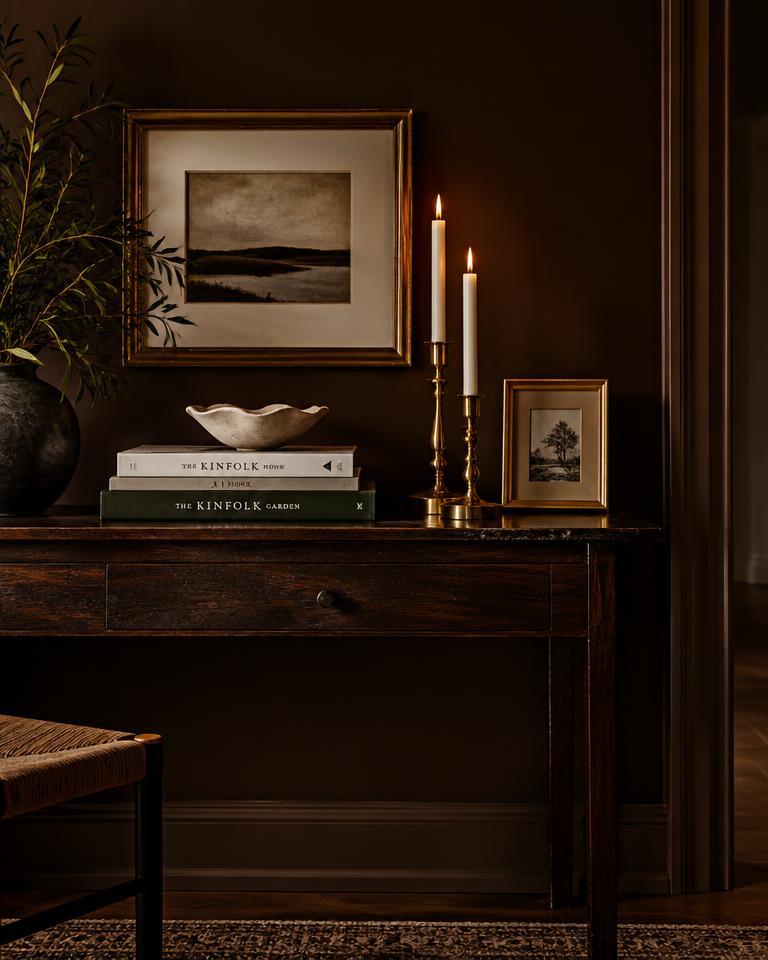
One room has dark walnut and brass.
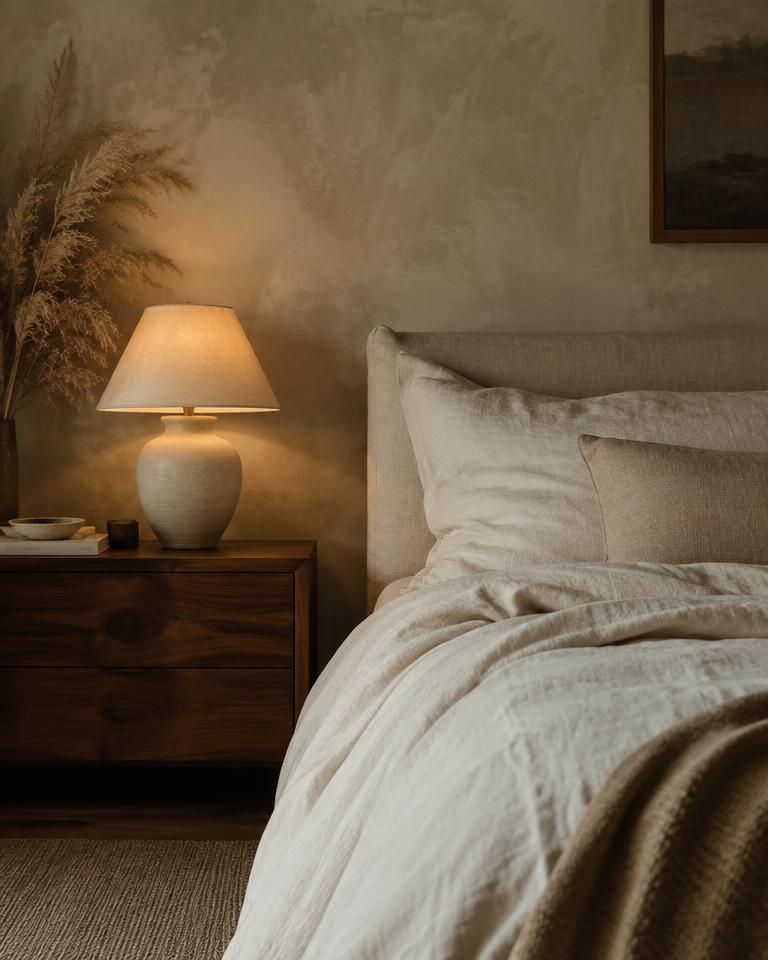
Another is filled with pale plaster and linen.
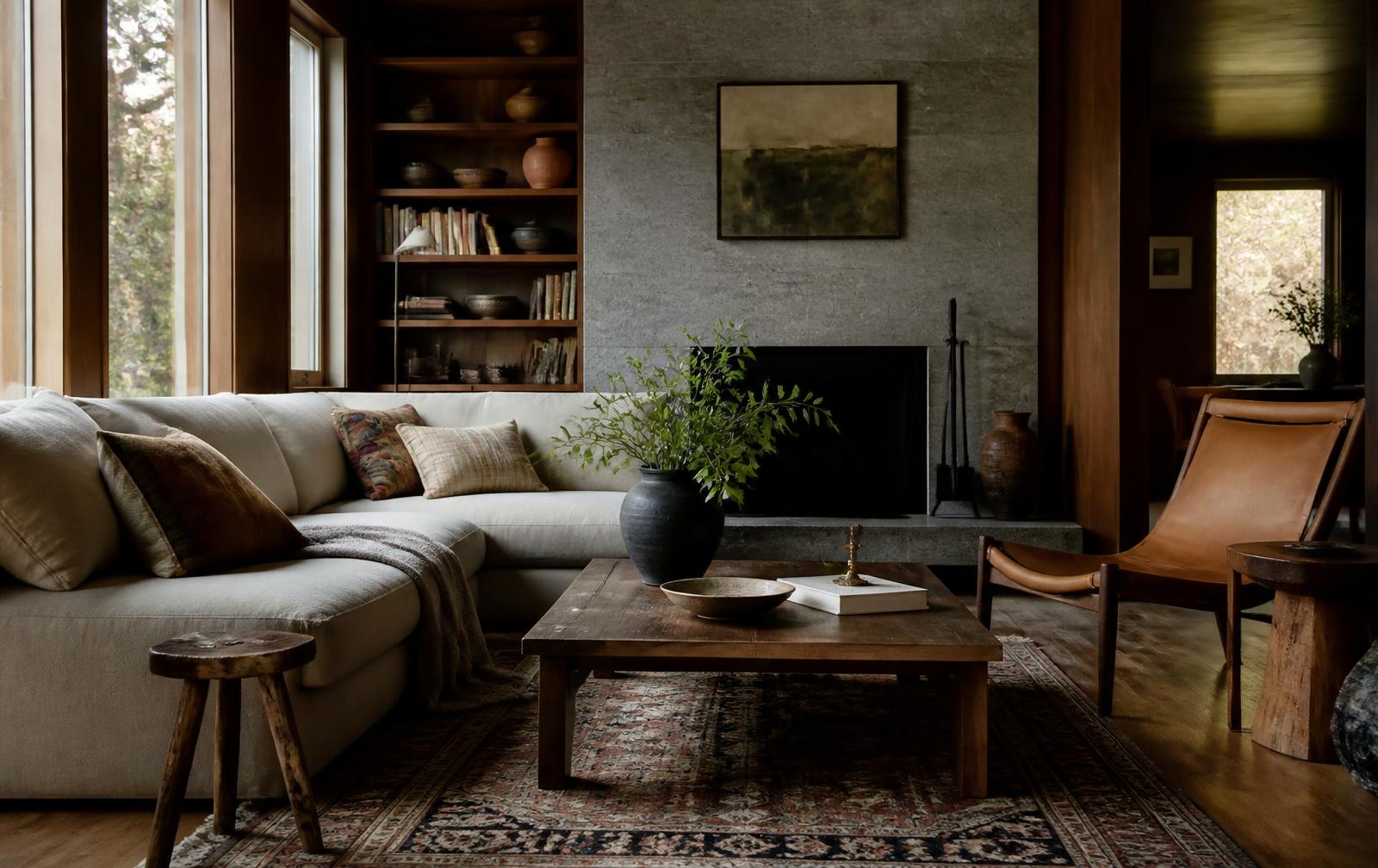
A third has a vintage rug, colorful art, and sculptural furniture.
They assume the board is confused.
Often, it is not.
When I look through inspiration, I am not only asking:
What style is this?
I am looking for patterns underneath the style label.
- Maybe nearly every image has low, warm lighting.
- Maybe the rooms all use strong contrast.
- Maybe there is always something aged or imperfect next to something polished.
- Maybe the architecture is structured, but the furniture is soft and curved.
- Maybe every room gives the eye somewhere to rest.
Those patterns tell me far more than a label like “modern” ever could, and they are exactly what we look for early in how our design process works.
Your reactions matter as much as your inspiration
What you dislike is useful too.
You may not be able to explain why a room bothers you, but your reaction gives us information.
- Maybe it feels too busy.
- Maybe everything is the same tone and your eye wants more contrast.
- Maybe the furniture feels visually heavy.
- Maybe the lighting is too cool.
- Maybe the room looks beautiful in a photograph but feels like nobody actually lives there.
A designer’s job is not simply to collect the things you say you like.
It is to listen for the pattern behind your reactions.
That is part of how I begin to understand how you digest design.
Different people process design differently
This matters more than people realize.
Some clients understand a concept the moment they see a complete room rendering.
Others need to compare materials side by side.
Some want to understand the reasoning behind every recommendation.
Others become overwhelmed when they are presented with too many possibilities and would rather hear:
“These are the two options I believe are right for the room, and here is why.”
Some people make decisions quickly.
Others need to live with an idea for a few days.
Neither is better.
My job is not to force every client through the exact same decision-making experience. That belief sits at the center of Brittany’s approach to design.
I want to understand what helps you see clearly.
Before I ask you to make design decisions, I want to know how you process them.
What to bring instead of a perfectly defined style
If you are preparing to work with an interior designer, you do not need to create a presentation explaining your aesthetic.
Bring reactions.
- A handful of images you genuinely love.
- The room you keep coming back to.
- Something you dislike.
- Where you feel most relaxed.
- What drives you crazy about your current space.
- Whether you host twelve people for dinner or would rather curl up alone with a book.
- The piece of furniture you will never get rid of.
- How you want to feel when you walk through the door.
Those answers are often more useful than saying:
“I think my style is transitional.”
They also shape practical decisions later, when we move into furnishing and styling services and every piece has to earn its place in the room.
The goal is not to give you a label
At the end of a project, you may have better language for your aesthetic.
But I am not designing toward the moment when someone walks into your space and correctly identifies a style.
I am designing toward the moment when someone walks in and says:
“This feels like you.”
That is a much harder thing to create.
And a much more worthwhile one.
You do not need to know your design style before beginning.
You need curiosity about what you respond to and a designer who knows how to help you uncover the rest.
Related questions
What if my partner and I have different design styles?
Different preferences do not necessarily mean two incompatible directions. Often, each person is responding to different qualities such as comfort, contrast, color, form, or familiarity. The goal is to understand those underlying preferences and create a shared visual language.
Should every room in my house be the same style?
No. Rooms can have different moods and functions while still feeling connected through recurring materials, color relationships, architectural details, proportions, or a consistent point of view.
Is Pinterest enough to communicate what I like to an interior designer?
Pinterest can be very useful, but the images are only the starting point. The most valuable information often comes from discussing what you notice in the images and how each one makes you feel.
Curious how that works in practice? Explore Our Process.