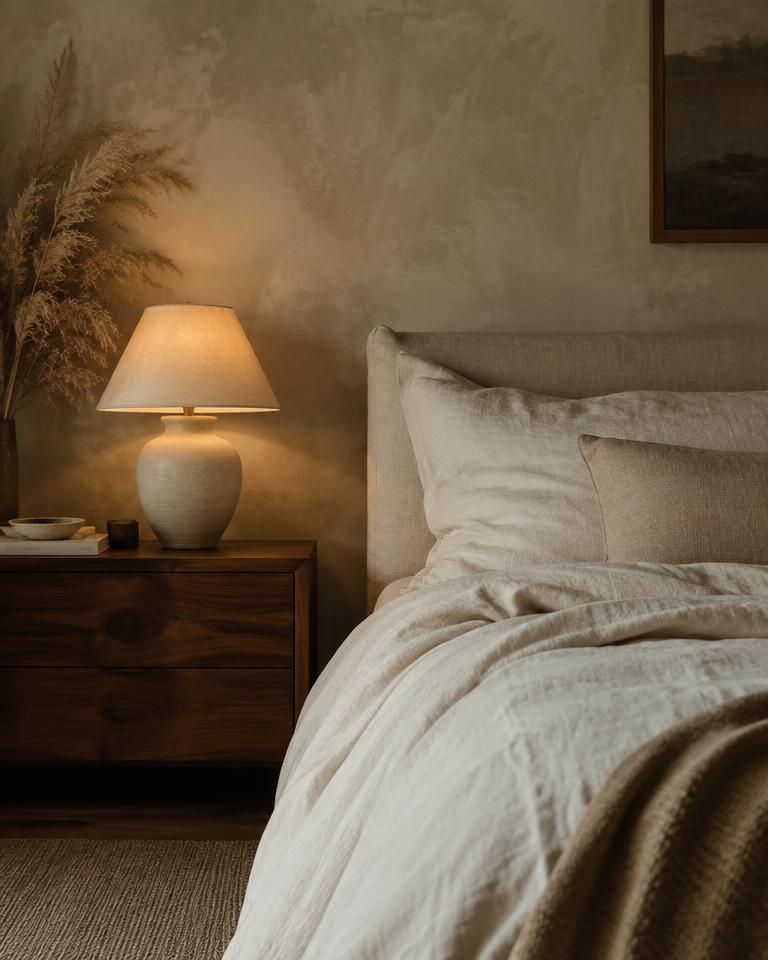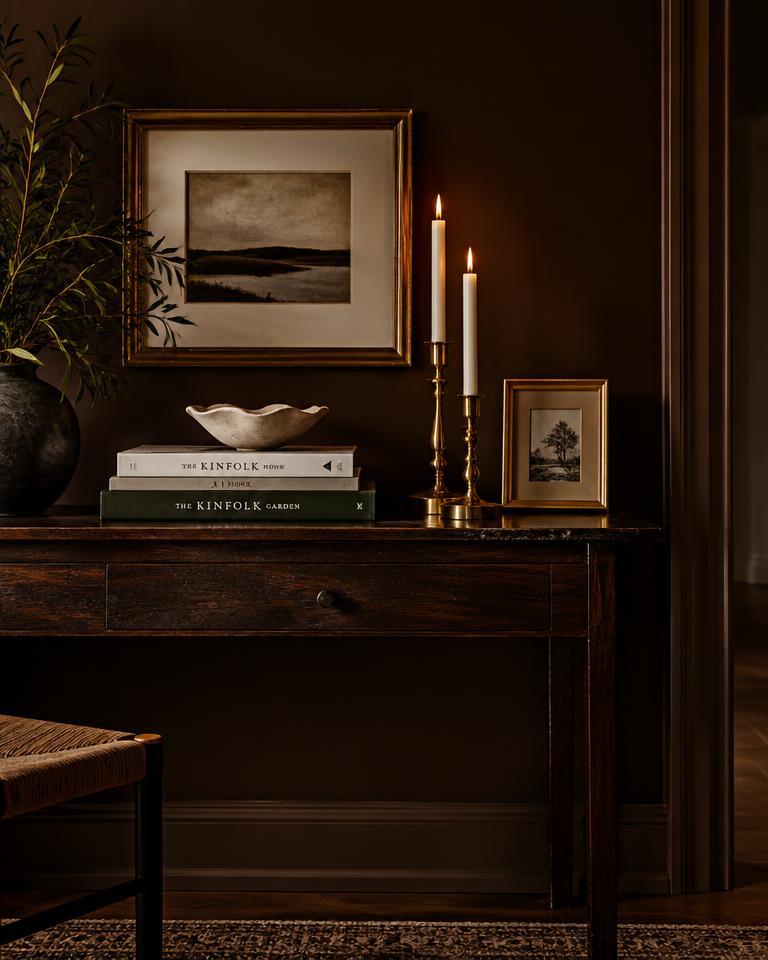
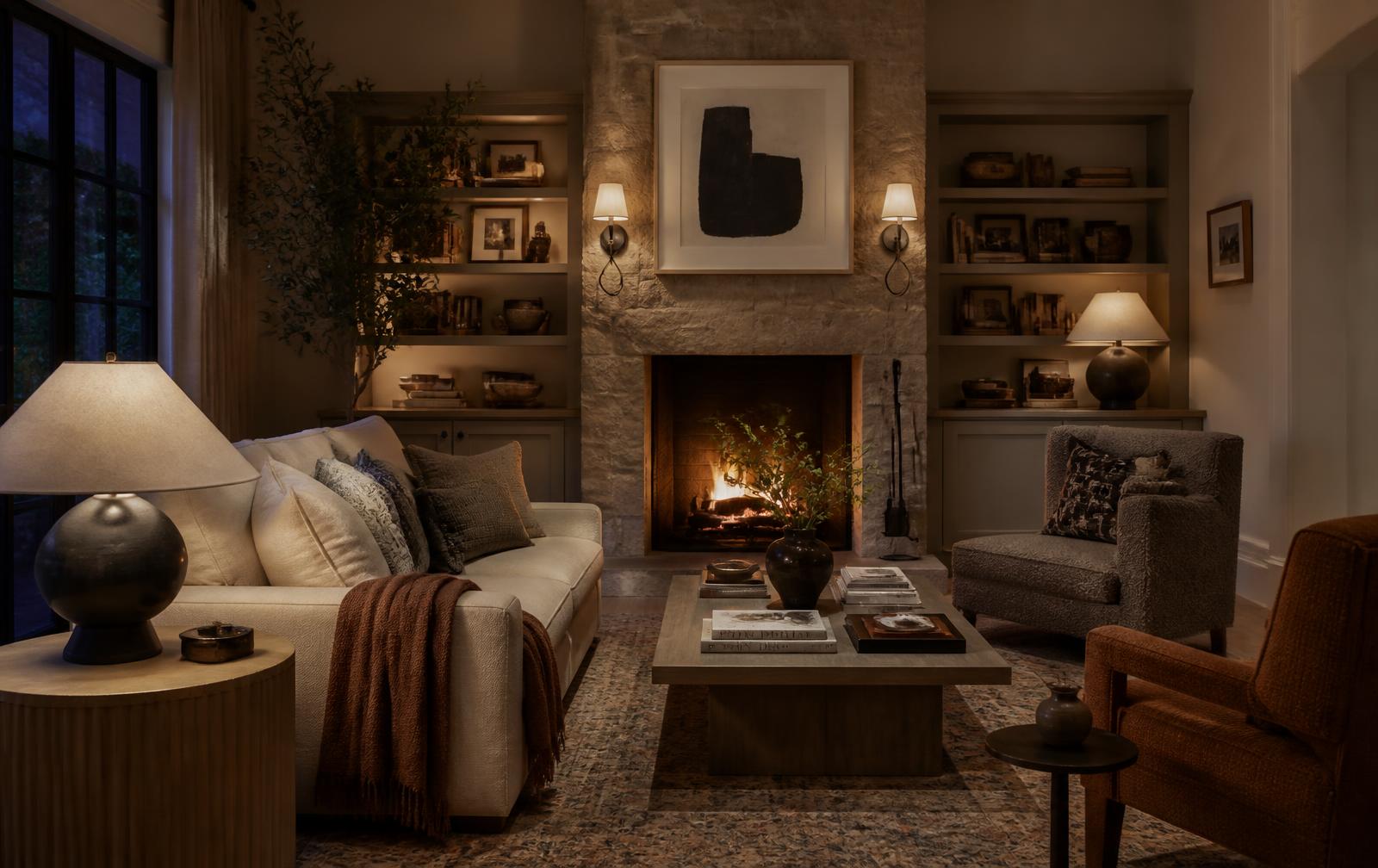
Recognizing a beautiful room is not the same skill as building one. Interior design requires hundreds of interconnected decisions about scale, proportion, material, light, function, and sequencing, which is why even people with excellent taste can feel completely stuck.
You can have excellent taste and still find designing your own space incredibly difficult.
Those two things are not contradictory.
You may walk into a hotel and immediately know you love it.
You may save the perfect kitchen in seconds.
You may know which sofa looks better the moment you see it.
Then you sit down to design your own living room and suddenly you are comparing twelve nearly identical fabrics, questioning the coffee table you loved yesterday, and wondering whether the rug should be eight by ten or nine by twelve.
This happens because recognizing what you like and constructing a cohesive environment require different kinds of thinking.
Taste is only one part of design
Taste helps you react.
Design asks you to translate those reactions into hundreds of connected decisions.
A beautiful room is rarely the result of one extraordinary item.
It is the relationship between:
- scale
- proportion
- light
- color
- texture
- material
- circulation
- architecture
- visual weight
- function
- negative space
A sofa can be beautiful and still be wrong for the room.
A pendant can be stunning and still hang at the wrong scale.
A paint color can look perfect online and completely different in your actual light.
That is why buying nicer things does not automatically create a better space.
The individual pieces have to belong to the same conversation.
Inspiration does not automatically become direction
One of the hardest parts of designing for yourself is moving from:
“I like this.”
to:
“This is the direction.”
You might have 200 saved images.
That is plenty of inspiration.
But inspiration is not the same thing as a design framework.
Someone still has to decide:
- What is foundational?
- What is decorative?
- Which ideas belong together?
- Which reference should influence the architecture?
- Which should influence only the styling?
- What do you love because it is beautiful, and what would actually work in the way you live?
Those are interpretation decisions, and they are the reason you do not need a perfectly defined interior design style before you begin.
Until those decisions are made, every new option has equal power to send the project in another direction.
Too many choices create noise
When people feel stuck in a design project, they often assume they need to see more options.
Usually they need fewer.
There is an almost endless number of sofas, tile patterns, paint colors, cabinet finishes, light fixtures, faucets, rugs, chairs, and fabrics available.
More possibility does not necessarily create more clarity.
Often, it does the opposite.
One of the most valuable things a designer can do is reduce the field.
Instead of asking you to choose among forty possibilities, I may decide that only three genuinely make sense for the direction we are building.
Sometimes only one does.
That is not taking choice away from you.
It is giving the choice structure.
Design decisions also happen in an order
This is another reason doing it yourself can become frustrating.
Interior decisions are interconnected.
The wrong sequence can create expensive problems later.
- You choose a sofa, then realize the rug you loved is too small for it.
- You choose the dining table, then discover the fixture is undersized.
- You select the stone, then realize it changes how the cabinet color reads.
- You order furniture before fully resolving circulation.
The issue is not that any individual decision was bad.
The issue is that the room was being solved one object at a time instead of as a system.
Designers are thinking several decisions ahead. That sequencing is a large part of what creates cohesion, and it is built into our design process.
You may also be carrying too many other decisions
There is another reality that has very little to do with taste.
You may simply not have the bandwidth.
If you already spend your days leading a team, running a business, caring for a family, managing a household, or making constant professional decisions, choosing between eight shades of stone at 9:00 p.m. may be the last thing your brain wants to do.
Design projects can involve hundreds of decisions.
Some are exciting.
Many are not.
And when everything seems permanent or expensive, even small choices can begin to feel disproportionately heavy.
That is one reason I think good design is also good leadership.
My job is not to hand you every possible answer.
It is to understand what information you need in order to make the right decision confidently.
The way you process design matters
Not every client should be presented with information in the same way.
- Some people need to see the full room before they can decide whether they like the chair.
- Some want to touch a textile.
- Some need the dimensions and practical explanation.
- Some need to see option A beside option B.
Others need me to say:
“I have looked at the alternatives. This is the one I recommend.”
Learning how someone processes design is part of learning the client, and it shapes how Brittany approaches design decisions.
That allows the process to become easier rather than adding another layer of work to their life.
A designer helps name what you are seeing
Sometimes the most useful moment happens when a client says:
“I don’t know. Something about this just isn’t right.”
That reaction matters.
- Maybe the room feels too symmetrical.
- Maybe the furniture is too heavy.
- Maybe the finishes are technically coordinated but emotionally flat.
- Maybe everything is new and nothing carries history.
- Maybe the client keeps saying they want “minimal” when what they actually want is quiet.
Those distinctions are difficult to identify when you are inside the decision.
A designer can help give that instinct language.
Once you can name what you are actually responding to, the direction gets much clearer.
You do not need better taste
This is the part I wish more people understood.
If you know what you like but cannot translate it into your own space, the problem is probably not that you lack taste.
You may simply be missing:
- a clear visual framework
- knowledge of scale and proportion
- a hierarchy of decisions
- access to the right options
- confidence about what matters
- someone who can interpret the patterns in what you already love
That is what design guidance is meant to provide, whether through a full project or focused furnishing and styling support.
My role is not to replace your point of view with mine.
It is to help you access the taste you already have, give it language, and turn it into something you can actually see and live in.
Related questions
Why does my room still feel unfinished even after I bought nice furniture?
A room can contain beautiful individual pieces and still lack cohesion. Scale, lighting, material balance, art, window treatments, spacing, and the relationship between objects often determine whether a room feels complete.
Is hiring an interior designer worth it if I already know what I like?
It can be. Knowing what you like is valuable, but a designer can help translate those preferences into scale, layout, material, sourcing, sequencing, and a cohesive overall direction.
Why do I keep changing my mind when decorating?
Changing your mind can happen when individual decisions are being made without a clear design framework. Once the overall direction, priorities, and decision hierarchy are defined, it becomes easier to evaluate whether an option belongs.
Want to understand how I guide that process? Meet Brittany.