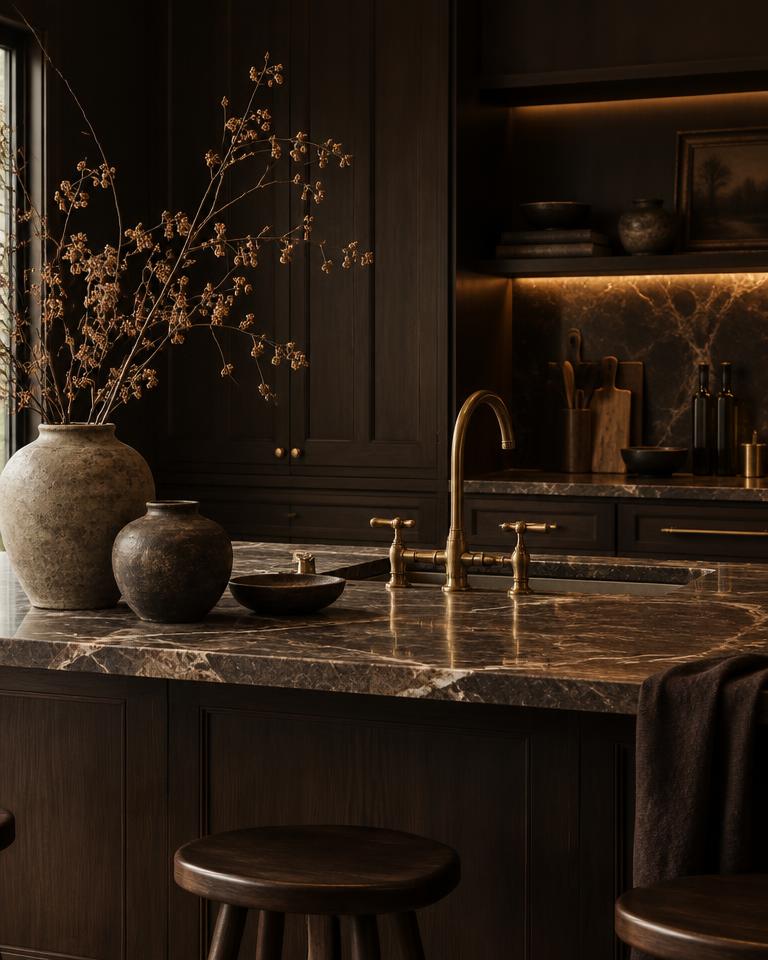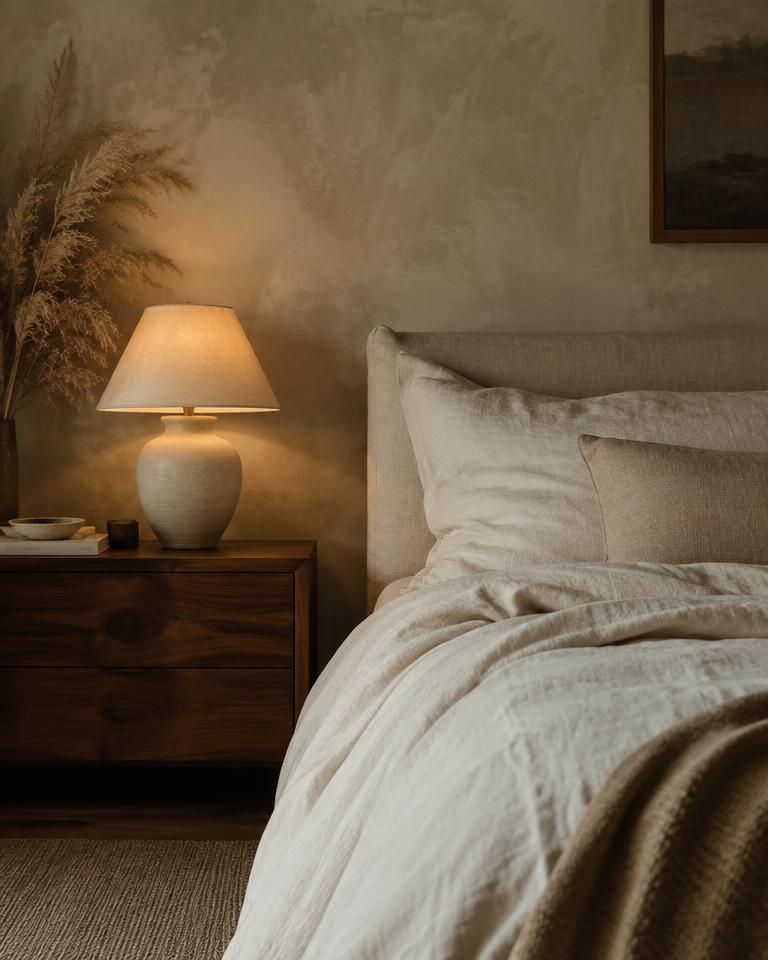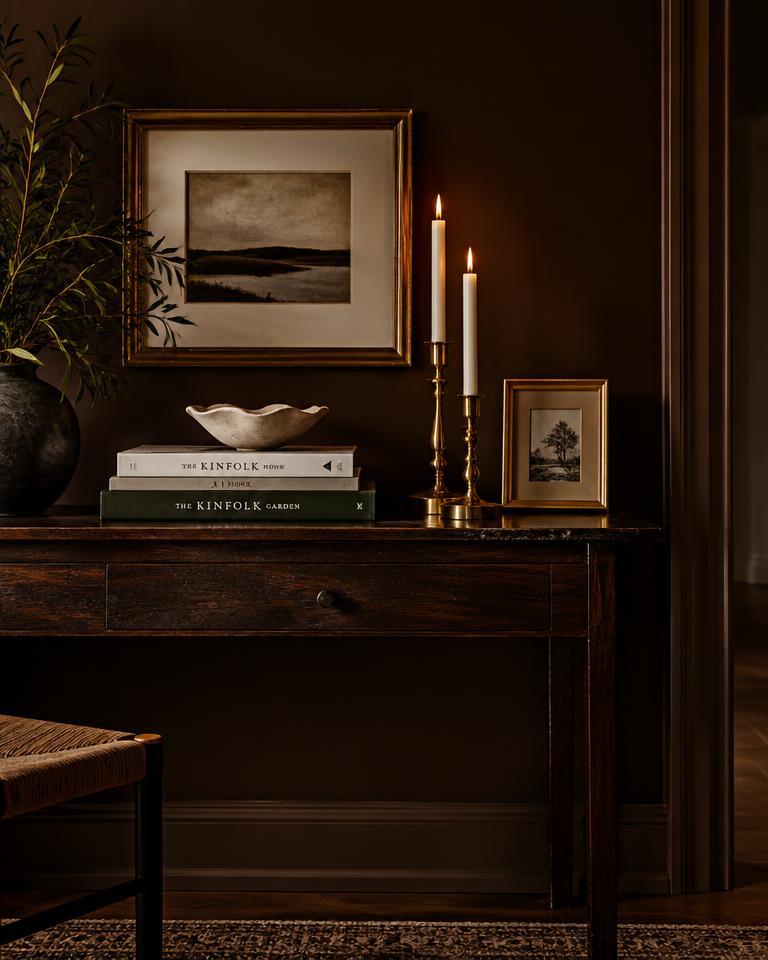
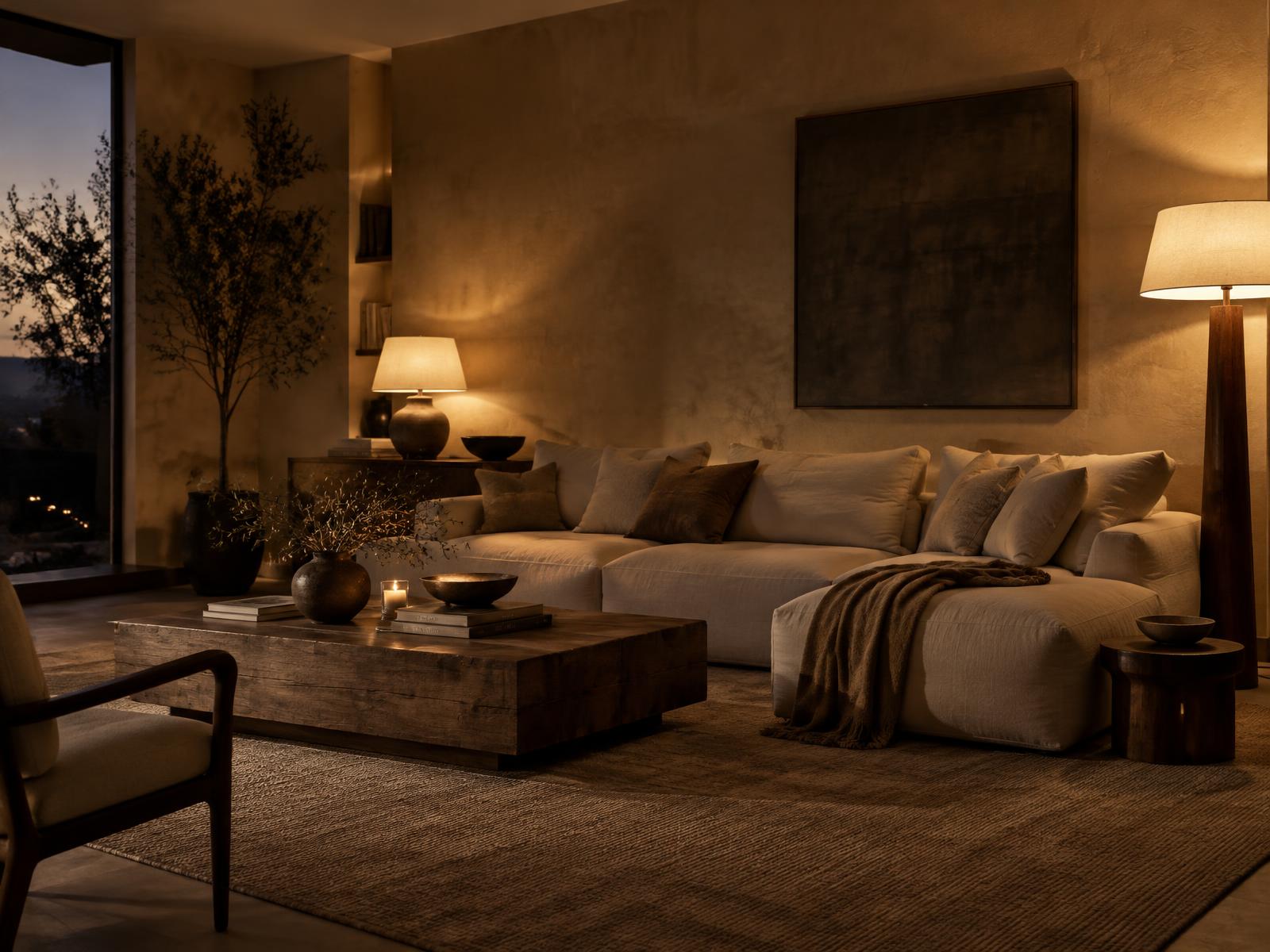
Light is the strongest signal your body uses to decide when to wake and when to rest. Why a ceiling full of bright downlights can leave you wired at night, and how layered, warm lighting helps a home follow your natural rhythm.
Clients often tell me a room feels wrong at night, but they cannot say why. The furniture is right. The colors are right. Yet by nine o'clock the space feels harsh, and nobody wants to sit in it.
Almost every time, the answer is the light.
Light is not decoration. It is a signal your body is always reading.
Your internal clock, often called your circadian rhythm, takes its main cue from light. Bright, cool light tells the body it is daytime and time to be alert. Dim, warm light tells it the day is ending. When a home sends the same bright signal from morning until midnight, the body gets mixed messages, and rest becomes harder to find.
The problem with a ceiling full of downlights
Many new homes are lit by a grid of recessed ceiling lights on a single switch. It is efficient and easy to install. It is also the lighting equivalent of one volume setting: everything on, or everything off.
Overhead light also comes from the direction of the midday sun. In the evening, that angle reads as daytime to the body, even when the bulbs are dimmed. It flattens faces, erases texture, and makes a room feel more like an office than a place to unwind.
Think in color temperature
Bulbs are rated in kelvin, which describes how warm or cool the light looks. A simple guide I use with clients:
- Around 2700K or lower feels like candlelight or a sunset. Ideal for living rooms, bedrooms, and anywhere you wind down.
- Around 3000K is a warm, clear white that works well in kitchens and bathrooms where you need to see clearly but still want comfort.
- 4000K and above reads as cool daylight. Useful in a home office or workshop during the day, but best avoided in evening spaces.
Consistency matters as much as the number. Mixing warm and cool bulbs in the same room is one of the quickest ways to make a space feel unsettled.
Layer the light
Instead of one source, I design every room with three layers:
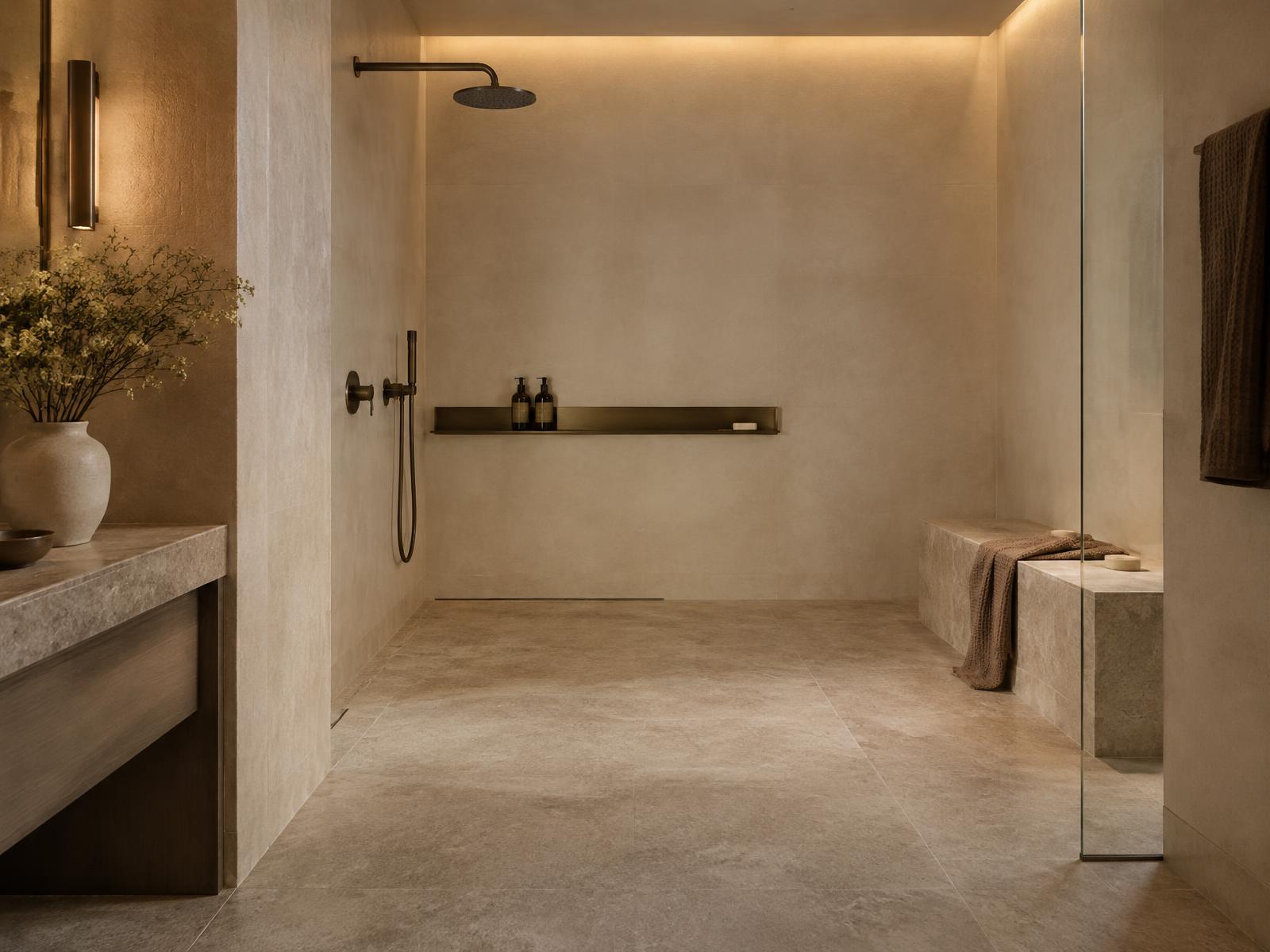
- Ambient light sets the overall glow. Think wall washers, cove lighting, or light bounced softly off the ceiling rather than pointed down from it.
- Task light goes exactly where work happens: under cabinets, over a desk, beside a reading chair.
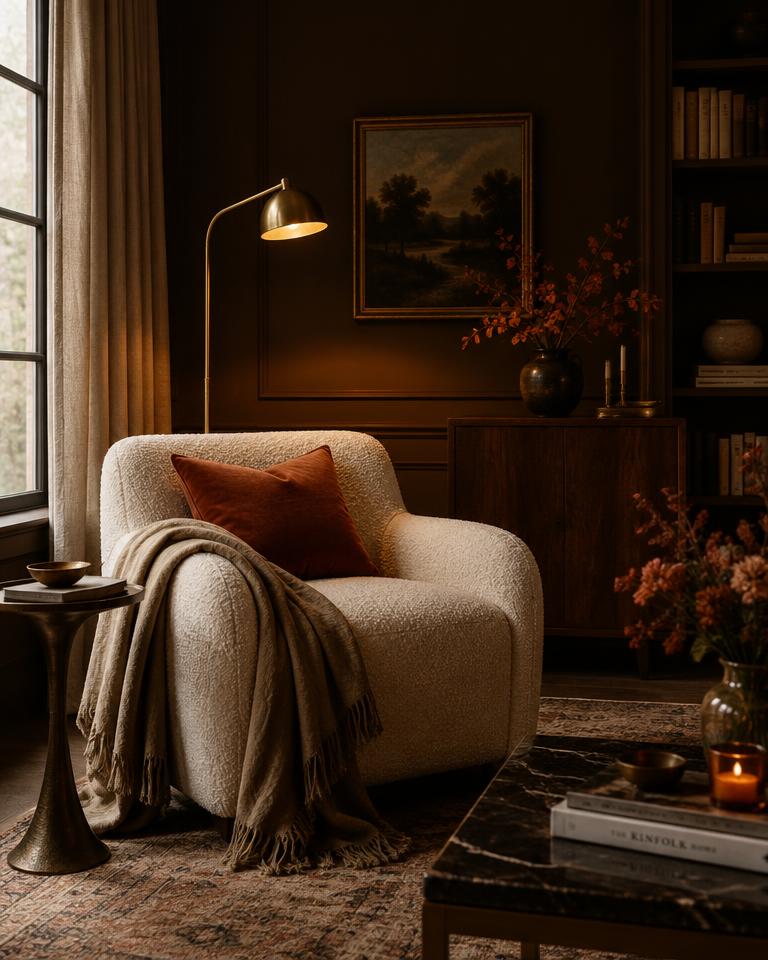
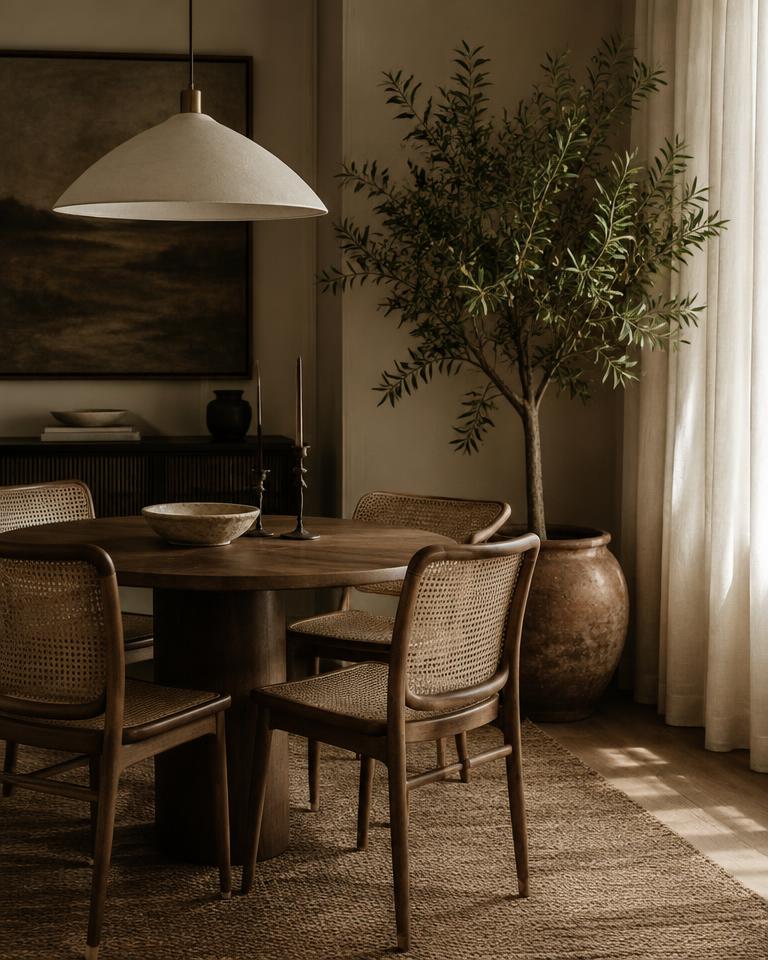
- Accent and mood light creates pools of warmth. Table lamps, sconces, and picture lights at seated height draw the eye down and make a room feel intimate.
With layers, a single room can be bright and focused in the morning and low and golden by evening, without any change to the furniture.
Bring the light down as the day goes on
One of the most useful habits is letting light move lower as the day ends. Morning light can come from above and from windows. By evening, the main sources should sit at or below eye level: lamps on side tables, sconces on the wall, a low glow along the floor of a hallway.
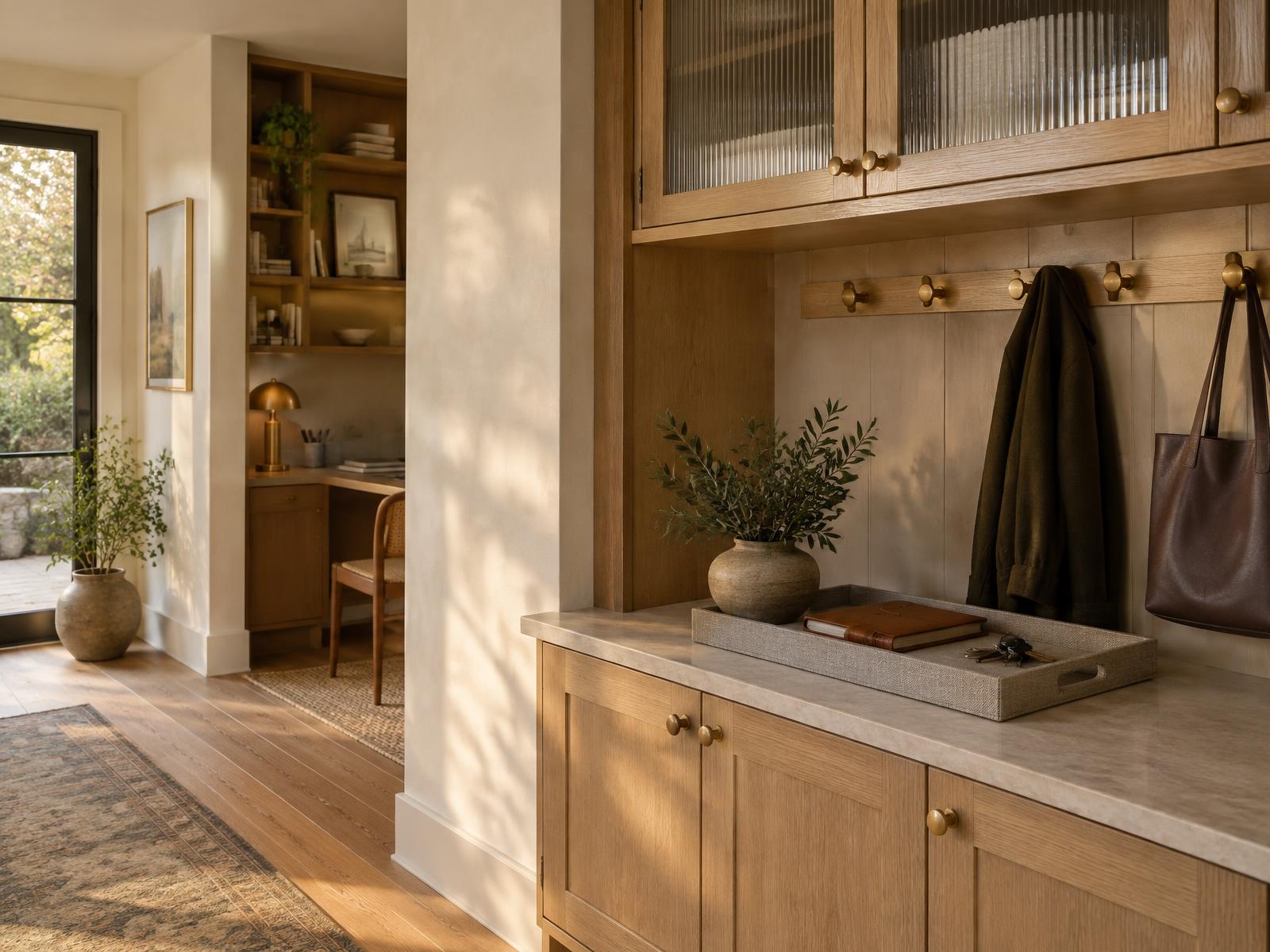
This mirrors the sun setting toward the horizon, and many people find it helps the body settle naturally. It also makes plaster, linen, wood, and stone come alive, because low, angled light shows texture in a way overhead light never can.
Do not forget daylight
Morning daylight is just as important as evening darkness. Where possible, I place breakfast spots, desks, and reading corners near east or south facing windows, and choose window treatments that filter light rather than block it completely during the day. Blackout layers belong in bedrooms, where full darkness supports deeper sleep.
Simple controls, not complicated systems
You do not need an elaborate smart home. Dimmers on every circuit, lamps on their own switched outlets, and one or two preset scenes for evening do most of the work. The goal is a home where turning the lights down at night is effortless.
Lighting is planned early in our design process, often before finishes are chosen, because it changes how every material and color will read.
A home that keeps time with you
A well-lit home does more than look beautiful. It quietly helps you wake up, focus, and then let go of the day. If you are planning a renovation or simply want rooms that feel better at night, begin the conversation.
This article shares design guidance and is not medical advice. If you have ongoing sleep or mood concerns, please consult a qualified healthcare professional.